Short answer
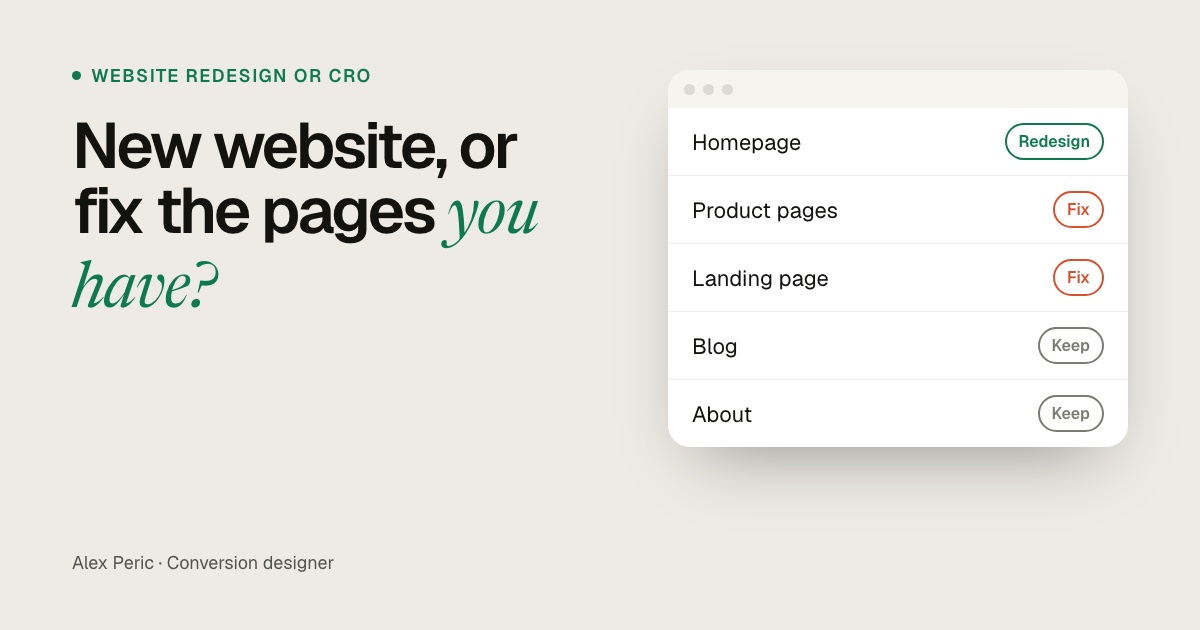
Choose CRO when your site works, loads fast and looks fine on phones, but too few visitors buy or get in touch: fix the pages where they drop. Choose a redesign when the site is dated, hard to use on a phone, slow, hard to update, or no longer fits your offer. Either way, base the redesign on research and keep what already converts, so you don't trade a new look for fewer sales.
Key takeaways
- CRO improves the site you have, page by page. A redesign replaces it.
- If you can point at the step where visitors drop, you probably need CRO, not a new site.
- A redesign makes sense when the site is dated, broken on phones, slow, hard to edit or off-message.
- A full redesign changes everything at once, so you can't tell what helped, and it can lose what converted.
- The best option is often in between: redesign the key pages with research, test them, then roll out the rest.
When a website doesn't bring enough sales or leads, the first idea is often "we need a new website". Sometimes that's right. Often the site needs a few pages fixed, not replaced. I do both: I redesign and build whole websites, and I optimize single pages. Here's how to tell which one your site needs.
What's the difference?
CRO (conversion rate optimization) keeps your site and improves the pages that lose visitors: the homepage, product or service pages, landing pages, forms and checkout. Changes are based on research and the big ones are A/B tested.
A website redesign replaces the design, structure and often the platform of the whole site. It's a bigger project, and it changes everything at once.
Signs you need CRO vs signs you need a redesign
| You probably need CRO if… | You probably need a redesign if… |
|---|---|
| Traffic is steady, but few visitors buy or get in touch | The site looks dated next to your competitors |
| The site works and looks fine on phones | It's hard to use on a phone |
| You can see where visitors drop: a page, a form, the cart | Pages are slow, and the theme or builder makes that hard to fix |
| Ad traffic lands and leaves quickly | Your team can't update pages without a developer |
| The brand and offer are still right | Your offer, audience or brand has changed since the site was built |
Quick check
Do you need a redesign? Tick what's true
Sometimes you need one page, not a new website
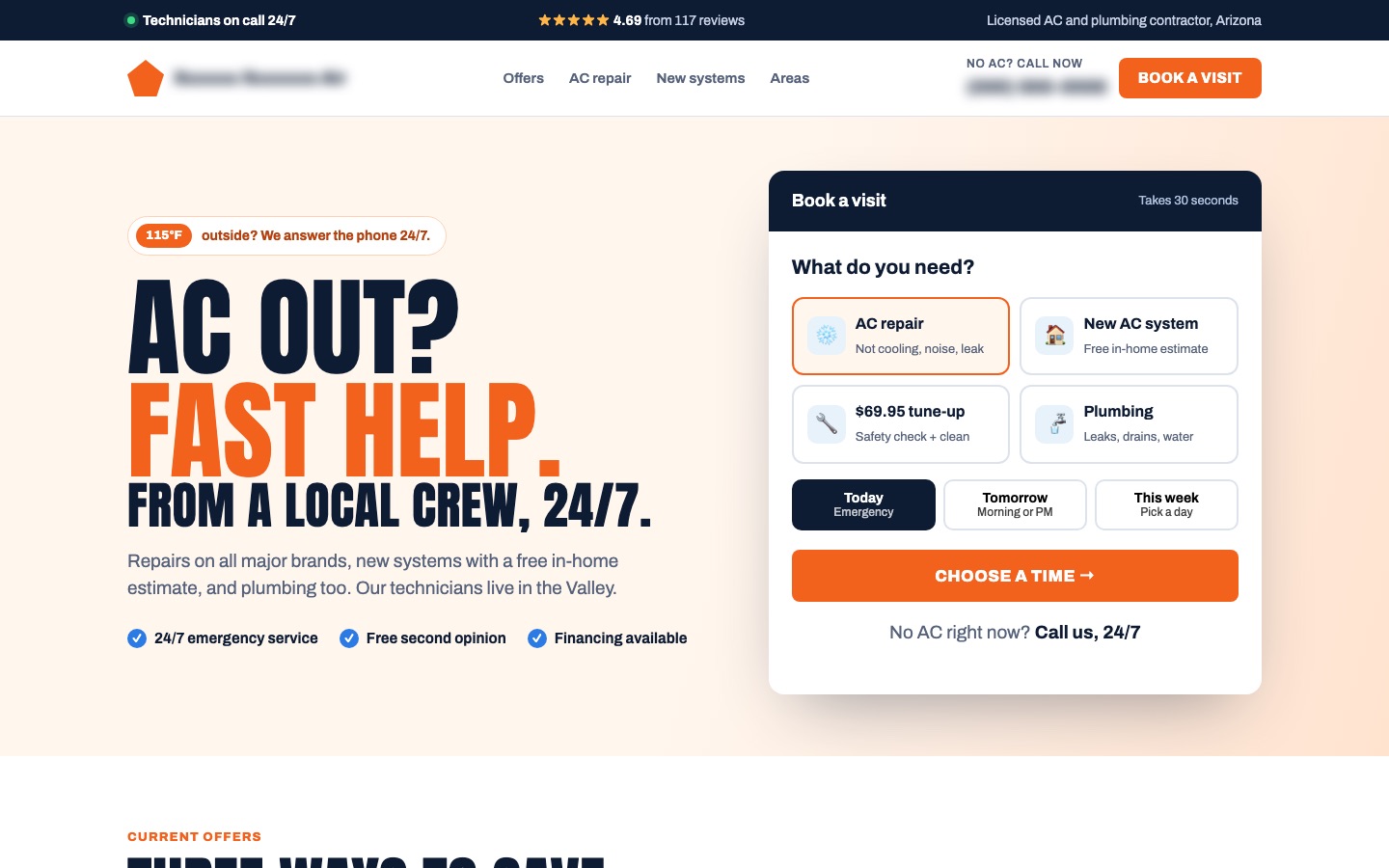
A solar installer sent its Meta ads to a homepage that led with the company name and kept its only form at the bottom. The fix wasn't a new website. It was one focused page with a four-step estimate on the first screen, built around what local buyers worry about: winter, outages and rebates. Leads went up 57,3%.
If most of your revenue comes through one path, like ads to a landing page or search to product pages, start there.
The risks of a full redesign
- You can't tell what worked. When everything changes at once, a rise or drop in sales can't be traced to any one change.
- You can lose what converted. The phone number in the header, the reviews near the form, the FAQ that answered the price question: small things that quietly brought sales often don't make it into the new design.
- Search traffic can drop. Changed URLs without 301 redirects, removed pages and missing content can cost rankings. Google's guidance on site moves covers the redirects to set up.
- It takes longer. Months of design and build before any improvement reaches visitors.
How to redesign a website without losing sales
- Research what works today. Your top pages, where visitors come from, where they leave, and what customers ask before buying.
- List what converts now and make sure every item has a place in the new design.
- Start with the pages that make money: homepage, product or service pages, landing pages, signup or contact. Write the copy and wireframes first.
- Design for phones first. That's where most visitors see the site.
- Build it with clean URLs, and redirect every old URL that changes.
- Test the key pages against the old ones if you have the traffic, or launch in stages.
- Compare the weeks after launch with the weeks before, by page and by traffic source.

The middle option: redesign the key pages first
For most businesses the best answer is in between. Redesign the homepage and the pages that bring sales or leads, using research. Test them against the current versions where traffic allows, then roll the new design out to the rest of the site. You get the new look where it matters, with proof it didn't cost you sales.
That's how I approach website design and redesign: research first, the money pages first, designed and built, and measured after launch. On one client's website redesign, the conversion rate went up 19%.
FAQ
How do I know if my website needs a redesign?
When it looks dated next to competitors, is hard to use on a phone, is slow, can't be updated without a developer, or no longer fits your offer or brand. If the site works but few visitors convert, CRO on the key pages is usually the better first step.
Will a website redesign improve conversions?
Only if it's based on research into what visitors need and keeps what already converts. A redesign that only changes the look can lower conversions, and since everything changes at once, it's hard to tell why.
Is CRO cheaper than a website redesign?
Usually, because it changes the pages that matter instead of the whole site, and improvements go live sooner. A redesign costs more but fixes problems CRO can't, like a slow platform or an outdated brand.
Can you do CRO and a redesign at the same time?
Yes. Redesign the key pages with research, test them against the old versions where traffic allows, and roll the winners out to the rest of the site.
Will a redesign hurt my SEO?
It can if URLs change without 301 redirects or if pages and content are removed. Keep URLs where you can, redirect the ones that change, and check search traffic after launch.
Sources

Conversion designer. I design and build product pages, landing pages and websites, A/B test them and show what each change earned. CXL certified in Conversion Optimization and Ecommerce Marketing, and a guest speaker at NYU School of Professional Studies.